Phantom Linux OS Forums
Unfortunately no one can be told what Phantom Linux OS is - you have to see it for yourself.
You are not logged in.
- Topics: Active | Unanswered
Pages: 1
#1 Announcements, Package & Security Advisories » Information for Lenders And Financial Organizations » 2025-10-16 19:09:53
- HugoStoate
- Replies: 0
My CHI. My Future.
Public Safety
Taxes
Technology
Transparency
Transportation
Vendor Impact Fund
- Elected Officials
Mayor's Office City Clerk City Treasurer City Council (Your Ward & Aldermen)
- Other City Agencies
City Colleges City Board Office of Financial Analysis Housing Authority (CHA) Park District Public Building Commission Public Schools Transit Authority (CTA) Metro Pier & Exposition Authority
- Departments
311 City Services Administrative Hearings Animal Care & Control Aviation Budget & Management Buildings Bus. Affairs & Consumer Protection City of Chicago TV Civilian Office of Police Accountability Community Commission for Public Safety & AccountabilityCultural Affairs & Special Events Emergency Mgmt & Communications
Environment Ethics Family & Support Services Finance Fire Fleet & Facility Management Housing Human Relations Human Resources Inspector General Law License Appeal Commission People with Disabilities Planning & Development
Police Police Board Procurement Services Public Health Town Library Public Safety Administration Streets & Sanitation Technology & Innovation Transportation Water Management
- Legislation and Regulation
Municipal Code Construction Codes Zoning and Land Use Ordinance City of Chicago Rules Portal
- Other
Employee Directory Boards & Commissions City Holidays (Offices Closed)
Chicago History
Facts and Statistics
Attractions
Social Network Accounts
Accessibility
Chicago's Department of Housing (DOH) broadens gain access to and option for locals and protects their right to quality homes that are budget friendly, safe, and healthy.
DOH Home - For Renters and Landlords Affordable Rental Housing Resource List
Rents Rights Campaign
Affordable Requirements Ordinance
Technical Assistance for Renters
Technical Assistance for Landlords
Area Median Income (AMI) Chart
Rental Subsidy Programs
" All Renter Services
" All Landlord Services
Housing Counseling Centers
Home Repair Program
Emergency Heating Repair Program
Small Accessible Repairs for Seniors (SARFS).
Building Neighborhoods and Affordable Homes Program.
Chicago Housing Trust.
Historic Chicago Bungalow Initiative.
Area Median Income (AMI) Chart
" All Homeowner Programs and Services.
" All Homebuyer Programs and Services
Qualified Allocation Plan (QAP).
Affordable Requirements Ordinance.
City Lots for Working Families.
Chicago Neighborhood Recovery Program (CNRP).
Troubled Building Initiative (TBI).
Chicago Housing Trust.
Chicago Neighborhood Rebuild Pilot Program.
Asset Management
" All Developer Services
Data, Plans, and Reports.
2019 - 2023 Five-Year Housing Plan.
2023 Qualified Allocation Plan.
Community Outreach and Engagement.
Supporting Information.
FOIA Requests
- Jul 16, 2025 - City Council Approves Land Sale and Financing for Southbridge Phase 1c Mixed-Income Development.
- Jul 16, 2025 - City Board Approves Amendments to City Lots For Working Families Program.
- Jul 16, 2025 - Bond Inducement Will Support Rehabilitation of Homan Square Affordable Apartments.
- Jun 18, 2025 - Chicago Department of Housing to Sell Troubled Building Initiative Residential Or Commercial Property.
- Jun 18, 2025 - Amendment for Land Redevelopment Agreement Approved
View All
- Contact us
Contact us
Housing.
121 N LaSalle St, Room 1000.
Chicago, IL 60602
Home.
Departments.
1. Housing
The objective of Chicago's Department of Housing is to broaden gain access to and choice for residents and secure their rights to quality homes that are cost effective, safe, and healthy.
Resource Finder Tool
In English.
En Español
Featured Services and Programs
For Renters
Resources and details for Chicago renters and leaseholders.
For Landlords
Resources and info for Chicago landlords and residential or commercial property managers.
For Homebuyers
Resources for individuals seeking to purchase a home in Chicago.
For Homeowners
Resources for Chicago citizens who own a home.
For Developers
Resources and programs for developers of budget friendly housing in Chicago.
For Lenders
Information for loan providers and monetary organizations.
Resources for 2-4 Unit Owners
DOH preserves a list of resources for use by smaller sized property owners who own 2 to four property systems.
Community Outreach and Engagement
Find out about and request DOH for neighborhood engagement and outreach occasions.
Data, Plans and Reports
DOH information, plans and quarterly progress reports.
Affordable Requirements Ordinance
The ARO needs large domestic advancements to provide a percentage of systems at affordable rates.
QAP
The 2025 Qualified Allocation Plan (QAP) will help DOH direct federal cost effective housing funds to the communities where they are most required.
ATSM
The ATSM contains the policies and guidelines for building of multifamily inexpensive housing development projects in Chicago.
- Jul 16, 2025.
City Board Approves Land Sale and Financing for Southbridge Phase 1c Mixed-Income Development
- Jul 16, 2025.
City Board Approves Amendments to City Lots For Working Families Program
- Jul 16, 2025.
Bond Inducement Will Support Rehabilitation of Homan Square Affordable Apartments
- Jun 18, 2025.
Chicago Department of Housing to Sell Troubled Building Initiative Residential Or Commercial Property
- Jun 18, 2025.
Amendment for Land Redevelopment Agreement Approved
View all News Releases
Data, Plans and Reports.
For Developers.
For Homebuyers.
For Homeowners.
For Landlords.
For Lenders.
For Renters.
Housing News
2019 Qualified Allocation Plan.
2019-23 Five-Year Housing Plan: One Chicago.
2021 Qualified Allocation Plan.
2023 DOH-CERESI Ask For Proposals.
2023 Qualified Allocation Plan.
- View all Supporting Information
FOIA Request Log - Housing
TENANT OPPORTUNITY TO PURCHASE BLOCK (606) DISTRICT PILOT PROGRAM
Department Main Office
Housing
- Phone: 312.744.3653
- 121 N LaSalle St.
Room 1000.
Chicago, IL 60602.
Get Directions.
Leadership.
Lissette Castañeda.
Commissioner
Contact Housing
Department Facts
About Us:
Mission.
Leadership.
Our Structure
Connect With Us
- Follow our Twitter!
Related Links
- Security Deposit Interest Rates.
- File a Housing Discrimination Complaint
Additional Information
Housing Programs and Services Booklet
Arabic|Simplified Chinese
Espanol|French|Polish|Tagalog
Farsi|Hindi|Korean|Pashto
Russian|Ukranian|Urdu
Vietnamese
2022 Annual Report
I Wished to
Bid Job Opportunities.
Building Permit (online).
Chicago Housing Authority (CHA) Housing.
Internships and Volunteer Programs.
Job Opportunities at City of Chicago.
More services
Abandoned Vehicle Complaint.
Building Violations.
HomeMod - My Application status.
Parking, Traffic Signal, or Speed Ticket( s).
Permit for Business ID and Advertising Signs.
Service Ask For Street Light Out.
More services
Auto Pound Locations.
Bids, RFP, RFQ, RFI, Small Order.
Chicago Construction Codes.
Vital Records from the Cook County Clerk's Office.
- More services
Administrative Hearing Fines.
Business Taxes.
Calculate the Cost of a Building Permit.
Other City Debt Payments.
Parking, Traffic Signal, or Speed Ticket( s).
Surplus, Vehicles, Auctions.
Utility Bill.
View Automated Speed Enforcement Video.
- More services
Dog Registration.
For Park District Programs.
Register a Home Food Operation.
Vacant Building.
- More services
AIC (Annual Inspection Certification) Inspections.
Abandoned Vehicle.
Discrimination Complaint.
Economic Disclosure, Affidavit, Online EDS.
Pothole in the Street.
Stray Animals and Lost Pets.
- More services
Building Inspection.
Garbage Cart.
Graffiti Removal Services.
Parking Ticket Photos.
Residential Garbage Collection.
View Traffic Signal Video.
- More services
Alerts from NotifyChicago.
Community Emergency Response Team (CERT).
Internships and Volunteer Programs.
Voluntary Disclosure.
- More services
Contact DOH
Phone: 312.744.3653
Municipal government.
121 N. LaSalle St.
#2 Newbie Corner » What is Joint Tenancy? » 2025-10-15 16:33:55
- HugoStoate
- Replies: 1
Donate Today!
- Why should you resolve to support civil legal aid in 2024?
- Why Give To Legal Aid
- Everyone Benefits From Legal Aid
- Missouri Legal Aid Sucess Stories
- Video: A Client's Story
- Justice in Schools - Legal Services of Western Missouri
- Mid-Missouri Legal Services - Justice in the Halls Clinic
- Uncontested Divorce Clinic - Mid-Missouri Legal Services
- Veterans Law Project: Mid-Missouri Legal Services
- Mid-Missouri Legal Services Clinics Based Upon Interest
- Free Legal Clinic at St. Louis Public Library’s Central Branch
- Gene Taylor Veterans Clinic Springfield MO
- Topics
- Housing
- What is Joint Tenancy?
What is Joint Tenancy?
What is a Joint Tenancy?
Joint tenancy is a form of ownership by two or more individuals together. It differs from other types of co-ownership in that the surviving joint tenant immediately becomes the owner of the whole property upon the death of the other joint tenant. This is called a "right of survivorship."
A joint tenancy between a husband and wife is generally known as a tenancy by the entirety. Tenancy by the entirety has some different characteristics than other joint tenancies, such as the inability of one joint tenant to sever the ownership.
What is a Tenancy in Common?
A tenancy in common is another form of co-ownership. It is the ownership of an asset by two or more individuals together, but without the rights of survivorship that are found in a joint tenancy. Thus, on the death of one co-owner, his or her interest will not pass to the surviving owner or owners but will pass as an individual share according to his or her will or, if there is no will, by the law determining heirs.
How is a Joint Tenancy Created, and What Property Can Be So Held?
State law controls the creation of a joint tenancy in both real and personal property (real property is land and attachments to the land, personal property is generally all other types of property). For transfers to two or more persons who are not husband and wife, the deed or conveyance must expressly state an intention to create a joint tenancy by noting that the property will be held not as tenants in common but as joint tenants with rights of survivorship. For transfers of personal property, such as stock certificates, the simple letters "JTWRS" may be used to designate a joint tenancy with right of survivorship.
A joint tenancy can be created in almost any type of property. Different types of jointly held property have different characteristics. Either joint tenant of a bank account usually may withdraw the whole amount on deposit, depending upon the account agreement. The signatures of all joint tenants are generally required in order to transfer or sell bonds and corporate stocks. All joint tenants, and their spouses, must sign deeds and contracts to transfer or sell real estate.
Is a Joint Tenancy an Adequate Substitute for a Will?
No! Only with a will can a person be certain that his or her assets will pass as intended. A will, properly written and executed, applies to all of the property of the maker for which he or she has not otherwise provided. Almost everyone should have a will, even though he or she may have provided for property to pass by other methods.
A joint tenancy is not a comprehensive method of transfer and applies only to the specific property described in the instrument creating the joint tenancy. Furthermore, while a joint tenancy does provide for the surviving owner to own the property upon the death of one of the joint tenants, no provisions are included for the disposition of the property upon the death of the survivor. In addition, the joint tenant who is intended to be the survivor may die first, frustrating the intent of the parties. A properly structured will would address these and many other of life’s uncertainties.
A joint tenancy is a present transfer of an actual interest in the property. Except for joint bank accounts, it cannot be revoked or reversed without the joint tenant’s cooperation, and for real property the cooperation of the joint tenant’s spouse is also required. Creating a joint tenancy with someone other than your spouse may result in a gift being subject to gift tax.
A will is revocable and may be changed as circumstances change. It is the cornerstone of an effective estate plan.
Will a Joint Tenancy Avoid Probate Expenses?
Joint holdings may reduce probate involvement and expenses. However, while joint assets may avoid the formal estate administration that is required when property passes under a will, other costs may occur. Steps must be taken to reregister the assets in the survivor’s name and to comply with the various state and federal tax requirements. The process can be time-consuming and expensive. In addition, placing assets in joint names with another, especially someone other than a spouse, creates uncertainties and exposes the assets to the disadvantages discussed below.
What Are Some Advantages of Joint Tenancy?
Some of the advantages are:
- Property passes to the survivor without the need for probate administration. Generally, only a death certificate is needed to establish the survivor’s ownership in the property.
- Where the first to die wishes all of his or her property to pass outright to a surviving spouse, joint ownership may afford a convenient and economical way to pass title to the particular property so owned. For example, it may be advantageous for a summer home located in another state to be owned in joint names with the right of survivorship. This way, upon the death of either joint tenant, the survivor will own the home outright and the need for probate administration in the other state will be avoided.
- The family residence is often held in joint names, especially where thesurviving spouse is likely to continue to use the property as his or her home. In that case, joint ownership may be an appropriate method of ensuring continuity of ownership.
- A joint household checking or savings account can offer a married couple both convenience and flexibility, as it makes funds immediately available in the event one spouse dies or becomes incapacitated.
What Are Some Disadvantages of Joint Tenancy?
A few of the disadvantages are:
- The original owner of the property who subsequently placed it in a joint tenancy is no longer the sole owner.
- If the original owner later desires to dispose of the property, in many cases he or she cannot sell his or her partial interest unless the other joint tenants agree and cooperate.
- If both joint owners die in a common accident or disaster, and it cannotbe determined who died first, the legal ownership of the property may be uncertain, resulting in additional legal costs.
- If a conservator is appointed for the original owner, the probate court’sauthority may be required to use the asset for that owner, increasing the cost of the conservatorship.
- If minors or legally disabled adults are involved, costly and cumbersomeconservatorship proceedings may be necessary.
- An always present danger in joint tenancy arrangements is that the co- owners may disagree. If the co-owners do disagree, a costly and time consuming lawsuit may be required for the original owner to exercise his or her rights regarding the asset.
- If an asset is owned jointly prior to marriage, the original owner may lose part of the asset in a divorce.
- A jointly owned asset will be subject to judgments against every owner and may be lost in the bankruptcy of any owner.
- The financial management advantages of trusts are eliminated, especially where aged parents or minor children are involved, as are the possible tax savings available to trusts and estates.
- Assets may not be available to the executor of a deceased joint owner’s estate. In such a situation, it may then be necessary to sell other assets in order to meet tax payments or other cash needs in order to settle the affairs of the decedent.
What Tax Consequences Could Result From the Creation of a Joint Tenancy?
Serious tax disadvantages may result from the use of property held as a joint
tenancy. If all the property owned at death - including joint property, life insurance and employee benefits - exceeds a certain exemption limit, the estate may be subject to federal and state estate taxes. Estate taxes are not avoided by joint tenancy. In many instances, all or part of jointly held property may be includable in the estate of the first joint tenant to die.
An asset owned jointly may retain part of its original cost basis. Upon the sale of the asset after the death of one owner, the capital gains taxes may be significantly increased. Transferring property into joint tenancy may also result in a gift tax. While recent changes in federal tax laws have to a large extent minimized the gift tax consequences of joint ownership, especially between spouses, effective tax planning for large estates can be greatly complicated by the use of joint property arrangements.
May Safe Deposit Boxes Be Jointly Held?
Under Missouri statutes, safe deposit boxes may be jointly rented. This type of registration must be specifically noted in the rental agreement with the bank or safe deposit box company. With a jointly rented safe deposit box, the surviving joint tenant will have immediate access to the box upon the death of the other joint tenant. However, even though a safe deposit box is rented in joint names, that alone does not mean that all of the assets contained in the box are also jointly owned. As a result, joint ownership of a safe deposit box may complicate matters rather than making them simpler.
Should I Use a Joint Account for Help in Writing Checks?
No. Some people will place a child or someone else on a checking account as a joint tenant to help them write checks to assure that bills are paid in the event the original owner is unable to do so. Upon the original owner’s death, the entire account will belong to the other person; other heirs will not share in it. Oral understandings about what is to be done with the account balance upon death are frequently misunderstood and often forgotten. Furthermore, the surviving joint tenant may be subject to gift tax liability if he or she attempts to share the funds in the account with other intended heirs after the original owner’s death. Anyone with a concern or needing help in this area should see their lawyer about a durable power of attorney or place a trusted person on the account as "agent."
Alternatives to Joint Tenancy That Also Avoid Probate
Missouri’s Pay On Death ("POD"), Transfer On Death ("TOD") and Beneficiary Deed statutes provide for the disposition of many types of property at the time of death without probate proceedings and without some of the disadvantages of joint tenancies. Under these statutes, the persons who are to receive the property on the death of the original owner may be designated as beneficiaries for accounts in financial institutions, securities, real estate and other instruments of title.
POD and TOD beneficiary designations and beneficiary deeds are revocable by the owner, the account or property passes outside of probate, and consent of the beneficiary to mortgage or sell the property is not required. As no present interest is transferred, no gift tax liability is incurred. The arrangement is preferable to joint tenancy in these respects. However, these designations are subject to some of the same disadvantages as jointly owned property; they are not intended to be an adequate substitute for a will or trust, since succession among intended beneficiaries usually cannot be adequately described in detail. A person should not open POD accounts or execute transfer on death instructions or beneficiary deeds without first consulting an estate planning attorney.
How Can I Tell Whether or Not a Joint Tenancy is Advisable for Me?
Your lawyer can advise you after he or she has been made aware of all of the facts concerning both your property and your family situation. The cost of such advice is usually quite small compared to the savings that may result and the pitfalls that can be avoided. Due to continual changes in the tax laws, the need for legal counsel is essential in estate planning.
Your lawyer can help you determine what property should be owned as joint tenants or as tenants by the entireties, when POD or TOD beneficiary designations might be useful for specific gifts, when a trust might be anappropriate part of your estate plan, and what property should pass under a will and be administered in your estate. If a gift to a minor is involved, your lawyer also can tell you about the Missouri Transfers to Minors Law.
In 2011, the Missouri Legislature created a trust specifically for tenancy by the entirety property called a Qualified Spousal Trust. Please talk to your legal advisor about the benefits of such a trust.
#3 Announcements, Package & Security Advisories » Commercial & Industrial Tenant Improvements » 2025-10-13 17:11:45
- HugoStoate
- Replies: 0
Most owners opening an organization in Simi Valley will go through a procedure called a "renter enhancement." A renter enhancement (TI) includes an alteration to an existing building, either interior or outside, or both, in which case you will need to meet City requirements concerning architectural design, constructing occupancy, construction, parking, organization signage, landscaping, and possible public right of way and sewage system improvements.
Please describe the informational booklet "How to Open a Small Company in the City of Simi Valley," which likewise helps to assist and orientate you through the tenant enhancement and the City's authorization procedure, consisting of any local agencies that might be included with the opening of your business.
Primary steps
The first point of contact is to talk to the City's Planning Division to make sure that the type of company is allowed the proposed place which the proposed organization fulfills the City's parking requirements. In addition, please note that your service might need a Conditional Use Permit (CUP), which is a license to guarantee your service is compatible with the surrounding uses.
Refer to the City's Zoning Maps and Zoning Code Section 9-26.030 (use matrix) to make sure the proposed organization is zoned for the proposed use and identify if the proposed usage requires Conditional Use Permit (CUP). Please refer to Conditional Use Permit for extra info in using and processing a CUP.
In addition, depending upon the level of any exterior improvements, a modification license from the Planning Division might be needed. Please describe Modification of Existing Commercial and Industrial Developments for information concerning the level of evaluation required.
Signs
If you have an interest in positioning a sign( s) at your store or thinking about a monument indication, you will need to acquire a Permanent Sign Permit. The Planning Division will release a Permanent Sign Permit after making sure compliance with the Zoning Code and Citywide Design Guidelines for area, size, and design of the sign.
Your sign specialist would prepare the needed elevation shows and picture simulation( s) revealing how the sign looks on the building. Please describe the Planning Division's Temporary and Permanent Signs page for more details relating to the City's indication ordinance and requirements.
City and County Involvement
Depending on the kind of company and the level of your improvements, the following City departments and County agencies might be included.
Public Works Environmental Compliance Division
If your service is a dining establishment, food, production, or vehicle center, or supplies medical, dental, veterinary, or photo-processing services, the Environmental Compliance Division of Public Works will likewise be associated with business task.
The Environmental Compliance staff enforces the City's Sewer Use, Stormwater, and Water Conservation Ordinances. By keeping track of, examining, and examining business's practices and operations, the Division protects the general public health and the environment from hazardous, dangerous, and other toxins.
New businesses are needed to finish an Ecological Compliance Discharge Permit Application. The applicant might likewise be required to submit a layout and pipes plans. Depending on the kind of company, you may be needed to install a pretreatment device, such as a grease interceptor, prior to obtaining building licenses.
For additional information, please contact the Environmental Compliance Technical Assistance at (805) 583-6420.
Ventura County Fire Protection District
The City's Building and Safety Division will identify whether the Ventura County Fire Department will require to authorize your renter enhancement building and construction strategies. Approval from this Agency is typically required for most building tasks.
While based in Camarillo, the Ventura County Fire Protection District is at the Building and Safety Division in Town Hall (Map) to respond to questions on Tuesdays and Thursdays from 9:00 AM to 12:00 PM.
For jobs requiring the District's approval, building and construction plans will need to be submitted to the following address: Ventura County Fire Protection District, 165 Durley Avenue, Camarillo, CA 93010-8586.
For more information, please contact Ventura County Fire Protection District at (805) 389-9710.
Ventura County Environmental Health Division
The City's Building and Safety Division will likewise determine whether the Ventura County Environmental Health Division will need to authorize your strategies. Food-handling facilities, businesses that produce dangerous products and waste, medical waste, and other pollutants will require approval from this Agency.
For additional info, please contact Ventura County Environmental Health at (805) 654-2813.
Building and Safety Division
Most improvements need building plans and a structure permit from Building and Safety. Construction strategies revealing the proposed work are required so City personnel can provide suitable permits after ensuring the plans are safe, structurally sound, and in compliance with all applicable Building Codes.
Please refer to Tenant Improvement Process for Company Owner for the Building and Safety Tenant Improvement Guide to help you through the process and a number of documents to assist your design expert prepare strategies rapidly and accurately. There are 4 components to the tenant enhancement procedure:
1. Construction Plan Preparation
2. Construction Plan Submittal/Review
3. Permit Issuance and Construction
4. Occupancy
Construction Plan Preparation
The initial step to ensuring an effective construction task involves keeping a licensed architect and/or engineer to draw your building strategies. Typically, plans prepared by a licensed architect and/or engineer will lead to both time and expense savings during the building phase and will facilitate a smoother tenant improvement process.
As a courtesy, a walkthrough of the proposed website can be organized with the City's Building and Safety personnel, service owner, and architect to resolve any questions or concerns relating to general code requirements prior to plan submittal.
Plans including all proposed architectural, handicapped access, energy, plumbing, mechanical, and electrical modifications will need to be submitted to the City for plan evaluation and license processing. Although not required, it is recommended that all strategies be sent at the very same time.
Plan Requirements
To assist the style specialist in drawing strategies for the proposed scope of work, please describe the following links for referral product detailing the numerous code and State requirements for the designer's evaluation:
Planning Division - Over-the-Counter (OTC) Plan Review Criteria
Building and Safety Non-Residential Plan Check Correction List, Including Accessibility Requirements
Building and Safety - Tenant Improvement Guide - OTC Projects Less 3,000 Square Feet
Building and Safety - Tenant Improvement Guide - Projects Exceeding 3,000 Square Feet
To help familiarize the service owner with the renter improvement process and acquire a much better understanding of the City's departments, external firms, and actions involved, please describe the Flow Chart of the Tenant Improvement Process.
If the renter enhancement involves an easy adjustment, an unlicensed designer or licensed professional performing the work might be allowed to submit the proposed plans. Building and Safety will make this decision once the Scope of Work has been specified.
Construction Plan Submittal/Review
Once your designer and/or engineer have completed the building and construction plans, City engineers will require to ensure that the drawings adhere to California Building regulations. This is the 2nd part of the occupant improvement process and is often called "Plan Check."
It is not uncommon for strategies to be returned to the architect and or engineer with corrections. For this reason, strategies generally reenter the "plan check" process for a second review. Building and Safety staff will determine the proper strategy check costs at the time of plan submittal. Plan check charges are based upon the scope of work of the project, which is identified by the size and type of building and construction.
Over-the-counter plan evaluation for non-structural improvements is offered for existing structures when the overall location is less than 3,000 square feet.
Service by consultation is available on Tuesdays and Thursdays in between 8:00 AM and 10:00 AM and can be arranged by calling (805) 583-6723. Plan check is also readily available by consultation with the respective plan checker.
Standard plan review for tenant improvements on existing buildings going beyond 3,000 square feet or "A" type occupancies such as restaurants will require a 10- to 15-business day reverse. Building authorizations are not issued until all City staff and suitable firms have actually approved the proposed plans.
Permit Issuance and Construction
Once building and construction plans have actually been authorized and prior to beginning building and construction, a structure authorization is issued to the owner of the residential or commercial property or a certified professional.
When a license is released to the residential or commercial property owner, the term of 'Owner/Builder' is referenced on the permit. Building and Safety staff will provide the 'Owner/Builder' with documentation notifying them of their responsibilities and possible danger of having actually the license provided in the Owner/Builder name.
If the permit is issued to a licensed contractor, the contractor will be required to provide evidence of Worker's Compensation insurance coverage. The specialist should have a Business Tax Certificate in order to obtain the permit. In addition, insurance coverage must be preserved throughout the building and construction duration per policies of the California Labor Code.
Larger projects will need a pre-construction conference. A pre-construction meeting normally includes Building and Safety inspection and engineering personnel in addition to the job's superintendent. The conference supplies an opportunity to evaluate amount of time, construction requirements, and the City assessment procedure.
Please note that it is essential to set up all of the needed structure assessments in order to evaluate each stage of building. It is the City inspector's job to make sure all work is consistent with the authorized strategies and all suitable State codes. The City inspector will not perform inspections unless it is scheduled by the professional or job supervisor.
Inspections can be arranged for the next business day by calling (805) 583-6723 no behind 3:00 PM on the day preceding the assessment.
Occupancy
The final stage of the renter improvement process includes acquiring last approvals from City departments and external agencies included with the task. Depending upon the type of business and scope of the task, you might need to get sign-off from the City's Planning Division and Public Works Department, together with the Ventura County Fire Department and Environmental Health Division.
During the construction process, the structure inspector will supply correction notices, informing the professional or superintendent of items that do not meet building code requirements. All outstanding code requirements need to be fixed prior to asking for the last assessment.
Once construction is complete, last inspections and sign-offs are obtained from both City departments and external agencies, the City's Building Official will release a Certificate of Occupancy. This legal file allows you to inhabit your new organization space.
Free viewers are required for a few of the connected files.
They can be downloaded by clicking on the icons below.
#4 Newbie Corner » Vice President of CRE Lending Execution - Process Improvement » 2025-10-13 13:40:01
- HugoStoate
- Replies: 0

Ready to work with us? Go to Ready to work with us? Our Hiring Process Sign In or Create an Account Create a Job Alert Contract Positions Recruitment Scam Alert
- - Jobs
- Talent Community
- Saved Jobs 0
Vice President of CRE Lending Execution - Process Improvement
- - CHARLOTTE
About this role:
Wells Fargo is seeking a Vice President of CRE Lending Execution - Process Improvement to support the development and implementation of Commercial Real Estate (CRE) wide enhancements within the lending process for all types of commercial real estate loans. They will partner with key stakeholders in CRE and Corporate and Investment Banking (CIB) to help stand up a best-in-class lending platform that is operationally sound. Learn more about our career areas and lines of business at wellsfargojobs.com.
In this role, you will:
- Examine current state CRE lending processes to drive opportunities for improvement and leverage existing CIB infrastructure
- Identify opportunities for uniformity and optimization of roles across CRE; must have the ability to "close the gaps" in communication across the total portfolio
- Support the adoption of a single platform to create consistent/ideal process workflows with enhanced controls
- Collaborates with key stakeholders to foster underwriting, closing and portfolio management standardization, especially with complex transactions and syndications
- Leverage best practice workflows, increase efficiency and consistency, reduce processing time to ensure uniformity across CRE
Required Qualifications:
- 5+ years of Credit Consulting Portfolio experience, or equivalent demonstrated through one or a combination of the following: work experience, training, military experience, education
Desired Qualifications:
- Process Improvement experience
- Project Management experience
- Commercial real estate lending experience
- Strong analytical skills with high attention to detail and accuracy
- Excellent communication skills and ability to articulate complex material to a diverse audience
- Experience conducting project meetings, presentations and status reporting
- Ability to thoroughly analyze credit policy and process on an independent basis and communicate findings in a concise manner
- Experience consulting, influencing and partnering with business executives and senior leadership
- Knowledge and understanding of portfolio management and international credit products
Job Expectation:
- This position is subject to FINRA Background Screening Requirements, including successful completion and clearing of a background check. Internal transfers are subject to compliance with 17 CFR 240.17f-2 of the Securities Exchange Act of 1934 and FINRA Bylaws, Article III, Section 3, which states that Associated Persons should not be subject to statutory disqualification. Successful candidates must also meet ongoing regulatory requirements including additional screening and are required to report certain incidents.
- Specific compliance policies may apply regarding outside activities or personal investing; affected employees will be expected to provide information to the Wells Fargo Personal Account Dealing Team and abide by applicable policy requirements if hired. Information will be shared about expectations during the recruitment process.
- Ability to travel
- Ability to work additional hours as needed
Posting End Date:
*Job posting may come down early due to volume of applicants.
We Value Equal Opportunity
Wells Fargo is an equal opportunity employer. All qualified applicants will receive consideration for employment without regard to race, color, religion, sex, sexual orientation, gender identity, national origin, disability, status as a protected veteran, or any other legally protected characteristic.
Employees support our focus on building strong customer relationships balanced with a strong risk mitigating and compliance-driven culture which firmly establishes those disciplines as critical to the success of our customers and company. They are accountable for execution of all applicable risk programs (Credit, Market, Financial Crimes, Operational, Regulatory Compliance), which includes effectively following and adhering to applicable Wells Fargo policies and procedures, appropriately fulfilling risk and compliance obligations, timely and effective escalation and remediation of issues, and making sound risk decisions. There is emphasis on proactive monitoring, governance, risk identification and escalation, as well as making sound risk decisions commensurate with the business unit’s risk appetite and all risk and compliance program requirements.
Candidates applying to job openings posted in Canada: Applications for employment are encouraged from all qualified candidates, including women, persons with disabilities, aboriginal peoples and visible minorities. Accommodation for applicants with disabilities is available upon request in connection with the recruitment process.
Applicants with Disabilities
To request a medical accommodation during the application or interview process, visit Disability Inclusion at Wells Fargo.
Drug and Alcohol Policy
Wells Fargo maintains a drug free workplace. Please see our Drug and Alcohol Policy to learn more.
Wells Fargo Recruitment and Hiring Requirements:
a. Third-Party recordings are prohibited unless authorized by Wells Fargo.
b. Wells Fargo requires you to directly represent your own experiences during the recruiting and hiring process.
-
-
-
-
Related Jobs
Real Estate Lending Executive - Commercial Banking
- CHARLOTTE, North Carolina / HOUSTON, Texas / LOS ANGELES, California / MINNEAPOLIS, Minnesota + 2 other locations
- Client Management
CIB Investment Banking COO Group, Assistant Vice President
- CHARLOTTE, North Carolina / NEW YORK, New York
- Strategy & Execution
Executive Director, Corporate Bank Portfolio Manager - Renewables
- CHARLOTTE, North Carolina / HOUSTON, Texas / NEW YORK, New York
- Client Management
Join our talent community
Learn about upcoming events and career opportunities at Wells Fargo
- Know Your Rights: Workplace Discrimination is Illegal
- Job seekers with disabilities
- Resources
- Important Recruitment Scam Alert
- Sitemap
- Privacy, Cookies, Security & Legal
- Notice of Data Collection
- Manage Cookies
-
-
-
-
-
-
All qualified applicants will receive consideration for employment without regard to race, color, religion, sex, sexual orientation, gender identity, national origin, disability, status as a protected veteran, or any other legally protected characteristic.
© 2025 Wells Fargo All Rights Reserved.
You are leaving the wellsfargojobs.com website.

You are leaving wellsfargojobs.com and entering a third-party domain. Although Wells Fargo has a relationship with this website, Wells Fargo does not provide the products and services on the website. Please review the applicable privacy and security policies and terms and conditions for the website you are visiting.
Any tools at the following website are provided for educational and illustrative purposes only. Wells Fargo does not guarantee the accuracy of the calculations and their applicability to your circumstances.
#5 Bugs » What are the Different Kinds Of Leases? » 2025-10-13 04:33:36
- HugoStoate
- Replies: 0

As an owner of industrial real estate, you have a number of options choosing how you will set up your leases. For some, the favored option is a full service gross lease (also understood as an FSG lease). In this post, we'll answer, "What is a complete gross lease?" and we'll describe how to structure one. Then, we'll resolve a full service gross lease example and answer some regularly asked questions.
What is a Complete Service Gross Lease?
In an FSG lease, the property owner is responsible for paying the maintenance, residential or commercial property tax and insurance expenses. In truth, an FSG is only one of a number of types of lease agreements. Moreover, landlords utilize a full service gross lease for multi-tenant residential or commercial properties and single tenant office complex. Equally important, the plan is for the property owner to gather the leas and utilize the cash for the residential or commercial property's costs.
Additionally, an FSG lease will include what we call an escalation stipulation. Specifically, the clause serves to protect the landlord from the ravages of inflation. That is, the stipulation enables the property owner to raise leas gradually. Naturally, the landlord utilizes higher lease collections to offset increased taxes, in addition to higher insurance and upkeep expenses. Naturally, the FSG lease spells all this out in information. Prospective tenants must make sure to comprehend the terms of the lease contract, including any escalation provisions.
Video: What is a Full Service Lease?
How to Structure an FSG Lease
A complete service gross lease describes the necessary actions and obligations of the property owner and the occupant. By the same token, it is a written legal arrangement that both celebrations should perform. There, you will discover language explaining payments and services in order to prevent landlord-tenant disputes. In reality, clarity is the hallmark of a well-written complete gross lease, and for that matter, for any proper and legal arrangement.
The structure of a lease depends on its type, consisting of monetary lease, operating lease, direct lease, and sale/leaseback leases. Overall, there are two types of gross lease structures:
Full Service: This is a gross lease which contains some type of language to handle inflation. Correspondingly, the renter is accountable for increasing operating expenses after the first year. We call this arrangement an expenditure stop.
Modified: A modified gross lease is like a net lease, because the tenant pays specific expenses. For example, these may include insurance coverage, residential or commercial property tax, utilities, repair and common area maintenance (CAM).
In addition, the other standard kind of structure is the net lease. Therefore, please see our article on net leases for complete information.
Terms Used in a Complete Gross Lease
These are some terms you will discover in an FSG lease:
Real Residential or commercial property: This is the whole residential or commercial property the property manager owns. For example, it's a mall that contains retailers.
Demised Residential or commercial property: This is the space the proprietor is leasing to the lessee. For example, it's a retail shop within a mall. Typically, the lease specifies a residential or commercial property map and the occupant's access to services, like cleaning, security and snow removal.
Term: The duration between the lease start and end dates. Alternatively, the lease might define a month-to-month tenancy, or possibly automatic renewals up until one celebration ends the lease.
Base Rent: This is the beginning lease, without additional costs.
Operating Costs: Additional expenses, such as residential or commercial property taxes, advertising, utilities, and so forth. Naturally, the lease specifies which costs the property manager pays and which the tenant pays, if any.
Security Deposit: The renter's in advance payment to secure versus missed out on lease payments and/or damage to the residential or commercial property. Normally, the landlord returns the deposit when the lease ends, that is, presuming the occupant returns the residential or commercial property back to the proprietor in as excellent a condition as the occupant initially received the residential or commercial property.
Occupancy and Use: These are guidelines that the occupant consents to observe, such as no smoking cigarettes on the premises. For instance, the rules may involve after-hours sound, trash discarding, and food service.
Improvements: The lease ought to define who is accountable for making enhancements to the residential or commercial property, including who pays the cost.
Contingencies: These are stipulations that specify how to handle the expenses for unusual events, such as fires and other catastrophes. Typically, other contingencies consist of the renter's personal bankruptcy, distinguished domain, and arbitration.
Get Financing
Full Service Gross Lease Example
The calculations behind a complete gross lease are straightforward. Equally crucial, property managers price estimate rental rates by the square foot. First, figure the base rental rate, starting with the variety of square feet. Then, increase it by the annual cost per square foot. Finally, divide the outcome by 12 to get the month-to-month base rent.
Video: How To Compare Costs When Comparing a Net Lease vs a Gross Lease?
Example
Imagine that you rent out an office of 2,200 square feet. For example, the yearly lease for 1 square foot is $11.50. Therefore, the yearly rent is:
2,200 SQFT x $11.50/ SQFT = $25,300/ Year.
Now, divide the result by 12 and the regular monthly base lease is $2,108.33.
($25,300/ Year)/ (12 Months/ Year) = $25,300/ 12 = $2,108.33
Obviously, due to the fact that the landlord is providing a full service gross lease, the rent will be higher by, state, $200/month. Clearly, this makes the monthly lease payment equal to $2,308.33 for the first year. Additionally, the lease consists of an escalation clause raising the rent each year by 2%. That means the rent increases to $2,354.50 after the first year.
Year 1 Monthly Rent: $2,200.00
Year 2 Monthly Rent: ($2,200.00 + $200.00) x 102% = $2,400.00 x 102% = $2,448.00
Year 3 Monthly Rent: ($2,448.00 + $200.00) x 102% = $2,648.00 x 102% = $2,700.96
Year 4 Monthly Rent: ($2,700.96 + $200.00) x 102% = $2,900.96 x 102% = $2,958.98
Year 5 Monthly Rent: ($2,958.98 + $200.00) x 102% = $3,158.98 x 102% = $3,222.16
Often, the rental agent takes a cost from the proprietor. Typically, the charge is 6% for the first five (5) years, more or less. Thus, in our example, the agent's charge is:
= 6% x 12 x ($2,200.00 + $2,448.00 + $2,700.96 + $2,958.98 + $3,222.16)
= 6% x 12 x ($13,530.10)
= 6% x $162,361.20
= $9,741.67
A Complete Service Gross Lease is Win-Win
Both the property owner and the renter can take advantage of an FSG lease.
Benefit to Landlords
The proprietor gain from a full service gross lease because they get to control expenditures. For instance, the proprietor might be finicky about common location upkeep, and would rather manage the CAM straight. The property manager can charge a higher lease for a complete service gross lease, often more than the expense differential. Furthermore, the property owner can put in an expense stop and/or escalation clause to ensure it caps the expenditure liability.
Benefit to Tenants
Tenants can prevent extraneous variable expenses by consenting to a full service gross lease. In this way, they can concentrate on their business and not the proprietor's business! Also, the occupant can prevent the duty for typical area upkeep and a prorated amount for taxes and energies.
Rent Calculator
Below is an online rent calculator. It has inputs for the location, overall rental rate/square foot/year, and agent's rate.
Frequently Asked Questions: FSG Lease
- What are the various kinds of leases?
The various kinds of leases are full service gross leases, net leases and portion leases. A triple-net lease requires the tenant to spend for residential or commercial property tax, insurance and common area maintenance. A portion lease provides the tenant a lower base rent in return for a piece of the renter's gross.
- What do you consist of in a complete gross lease?
The property owner gets all costs, consisting of upkeep, insurance coverage, residential or commercial property tax, utilities, and any other expenses that may arise. In return, the property owner charges a rent that is more expensive than a net lease.
- Are full service gross leases a great financial investment?
Yes, as long as it includes a method for the proprietor to cap costs. Usually, you achieve this with an escalation clause or an expenditure stop. In any case, the renter pays more money to compensate for the property manager's loss to inflation.
- What's the distinction in between a complete and customized gross lease?
In a full service gross lease, the property manager chooses up all the additional costs in return for a greater lease. Alternatively, in a gross customized lease, the occupant consents to pay some costs, as specifically spelled out in the lease terms. Of course, settlements determine the exact split of expenditures in between the property manager and renter.
#6 Announcements, Package & Security Advisories » The BRRRR Real Estate Investing Method: Complete Guide » 2025-10-12 17:12:59
- HugoStoate
- Replies: 0

What if you could grow your realty portfolio by taking the money (typically, someone else's money) you used to acquire one home and recycling it into another residential or commercial property, end over end as long as you like?
That's the property of the BRRRR property investing approach.
It allows financiers to acquire more than one residential or commercial property with the same funds (whereas traditional investing requires fresh cash at every closing, and thus takes longer to acquire residential or commercial properties).
So how does the BRRRR approach work? What are its benefits and drawbacks? How do you do it? And what things should you consider before BRRRR-ing a residential or commercial property?
That's what we'll cover in this guide.
BRRRR means buy, rehabilitation, lease, re-finance, and repeat. The BRRRR approach is gaining popularity because it allows investors to use the exact same funds to buy multiple residential or commercial properties and hence grow their portfolio more rapidly than standard realty financial investment approaches.
To begin, the investor discovers a good offer and pays a max of 75% of its ARV in cash for the residential or commercial property. Most lenders will only loan 75% of the ARV of the residential or commercial property, so this is crucial for the refinancing phase.
( You can either utilize money, difficult cash, or personal cash to acquire the residential or commercial property)
Then the financier rehabs the residential or commercial property and leas it out to renters to create consistent cash-flow.
Finally, the financier does what's called a cash-out re-finance on the residential or commercial property. This is when a financial organization offers a loan on a residential or commercial property that the investor already owns and returns the cash that they used to buy the residential or commercial property in the very first location.
Since the residential or commercial property is cash-flowing, the investor is able to pay for this new mortgage, take the money from the cash-out re-finance, and reinvest it into brand-new units.
Theoretically, the BRRRR procedure can continue for as long as the financier continues to purchase clever and keep residential or commercial properties occupied.
Here's a video from Ryan Dossey explaining the BRRRR procedure for novices.
An Example of the BRRRR Method
To comprehend how the BRRRR procedure works, it might be valuable to stroll through a quick example.
Imagine that you discover a residential or commercial property with an ARV of $200,000.
You prepare for that repair work costs will have to do with $30,000 and holding expenses (taxes, insurance coverage, marketing while the residential or commercial property is uninhabited) will have to do with $5,000.
Following the 75% guideline, you do the following math ...
($ 200,000 x. 75) - $35,000 = $115,000
You use the sellers $115,000 (the max offer) and they accept. You then find a difficult money lending institution to loan you $150,000 ($ 35,000 + $115,000) and offer them a deposit (your own money) of $30,000.
Next, you do a cash-out refinance and the brand-new lender consents to loan you $150,000 (75% of the residential or commercial property's value). You settle the tough cash loan provider and get your down payment of $30,000 back, which enables you to duplicate the process on a new residential or commercial property.
Note: This is simply one example. It's possible, for circumstances, that you might obtain the residential or commercial property for less than 75% of ARV and wind up taking home money from the cash-out refinance. It's also possible that you might spend for all purchasing and rehabilitation costs out of your own pocket and then recoup that money at the cash-out re-finance (rather than utilizing private money or hard money).
Learn How REISift Can Help You Do More Deals
The BRRRR Method, Explained Step By Step
Now we're going to walk you through the BRRRR approach one step at a time. We'll discuss how you can discover bargains, protected funds, calculate rehabilitation expenses, bring in quality renters, do a cash-out re-finance, and repeat the entire process.
The primary step is to find good offers and purchase them either with money, personal money, or hard money.
Here are a couple of guides we've created to assist you with discovering high-quality offers ...
How to Find Property Deals Using Your Existing Data
The Ultimate Real Estate Investor Marketing Plan: Better Data, More Deals
We likewise suggest going through our 14 Day Auto Lead Gen Challenge - it just costs $99 and you'll discover how to produce a system that creates leads using REISift.
Ultimately, you don't want to purchase for more than 75% of the residential or commercial property's ARV. And preferably, you wish to buy for less than that (this will lead to money after the cash-out refinance).
If you wish to find private cash to purchase the residential or commercial property, then try ...
- Reaching out to loved ones members
- Making the loan provider an equity partner to sweeten the deal
- Connecting with other company owner and investors on social networks
If you wish to discover hard cash to buy the residential or commercial property, then try ...
- Searching for tough cash loan providers in Google
- Asking a property agent who works with financiers
- Requesting recommendations to difficult money loan providers from regional title business
Finally, here's a quick breakdown of how REISift can assist you find and secure more deals from your existing data ...
The next step is to rehab the residential or commercial property.
Your objective is to get the residential or commercial property to its ARV by spending as little cash as possible. You certainly don't desire to spend too much on fixing the home, spending for additional home appliances and updates that the home does not require in order to be valuable.
That doesn't imply you must cut corners, though. Make certain you work with reliable professionals and repair everything that requires to be repaired.
In the video listed below, Tyler (our founder) will show you how he estimates repair expenses ...
When purchasing the residential or commercial property, it's best to estimate your repair costs a little bit greater than you expect - there are often unforeseen repair work that show up throughout the rehab phase.
Once the residential or commercial property is fully rehabbed, it's time to find renters and get it cash-flowing.
Obviously, you want to do this as rapidly as possible so you can refinance the home and move onto purchasing other residential or commercial properties ... but do not rush it.
Remember: the top priority is to find great occupants.
We recommend utilizing the 5 following requirements when considering tenants for your residential or commercial properties ...
1. Stable Employment
2. No Past Evictions
3. Good References
4. Sufficient Income
5. Good Financial History
It's much better to turn down a tenant since they do not fit the above requirements and lose a few months of cash-flow than it is to let a bad tenant in the home who's going to trigger you issues down the roadway.
Here's a video from Dude Real Estate that uses some great guidance for finding top quality renters.
Now it's time to do a cash-out refinance on the residential or commercial property. This will enable you to pay off your difficult money lending institution (if you used one) and recoup your own expenses so that you can reinvest it into an additional residential or commercial property.
This is where the rubber satisfies the road - if you discovered an excellent offer, rehabbed it adequately, and filled it with top quality tenants, then the cash-out refinance need to go efficiently.
Here are the 10 best cash-out refinance loan providers of 2021 according to Nerdwallet.
You might likewise find a regional bank that wants to do a cash-out refinance. But remember that they'll likely be a spices period of at least 12 months before the lending institution wants to offer you the loan - ideally, by the time you're made with repairs and have actually found tenants, this spices period will be ended up.
Now you repeat the procedure!
If you utilized a private cash lender, they may be going to do another handle you. Or you could use another difficult money lending institution. Or you might reinvest your money into a new residential or commercial property.
For as long as whatever goes smoothly with the BRRRR technique, you'll have the ability to keep purchasing residential or commercial properties without truly using your own cash.
Here are some pros and cons of the BRRRR property investing technique.
High Returns - BRRRR needs extremely little (or no) out-of-pocket money, so your returns need to be sky-high compared to traditional real estate investments.
Scalable - Because BRRRR permits you to reinvest the very same funds into brand-new units after each cash-out re-finance, the design is scalable and you can grow your portfolio really rapidly.
Growing Equity - With every residential or commercial property you purchase, your net worth and equity grow. This continues to grow with gratitude and earnings from cash-flowing residential or commercial properties.
High-Interest Loans - If you're utilizing a hard-money lender to BRRRR residential or commercial properties, then you'll likely be paying a high interest rate. The goal is to rehab, rent, and re-finance as rapidly as possible, but you'll typically be paying the tough money lending institutions for at least a year or so.
Seasoning Period - Most banks need a "flavoring duration" before they do a cash-out re-finance on a home, which suggests that the residential or commercial property's cash-flow is stable. This is usually at least 12 months and in some cases closer to 2 years.
Rehabbing - Rehabbing a residential or commercial property has its dangers. You'll have to handle contractors, mold, asbestos, structural inadequacies, and other unexpected issues. Rehabbing isn't for the light of heart.
Appraisal Risk - Before you buy the residential or commercial property, you'll want to ensure that your ARV estimations are air-tight. There's always a threat of the appraisal not coming through like you had actually hoped when refinancing ... that's why getting a bargain is so darn essential.
When to BRRRR and When Not to BRRRR
When you're wondering whether you need to BRRRR a particular residential or commercial property or not, there are two concerns that we 'd suggest asking yourself ...
1. Did you get an excellent deal?
2. Are you comfy with rehabbing the residential or commercial property?
The very first concern is essential since a successful BRRRR deal hinges on having found a lot ... otherwise you could get in problem when you attempt to refinance.
And the second question is necessary due to the fact that rehabbing a residential or commercial property is no little job. If you're not up to rehab the home, then you might think about wholesaling instead - here's our guide to wholesaling.
Wish to find out more about the BRRRR approach?
Here are some of our preferred books on the subjects ...
Buy, Rehab, Rent, Refinance, Repeat: The BRRRR Rental Residential Or Commercial Property Investment Strategy Made Simple by David M. Greene
The Book on Estimating Rehab Costs: The Investor's Guide to Defining Your Renovation Plan, Building Your Budget, and Knowing Exactly Just How Much All Of It Costs by J Scott
How to Purchase Real Estate: The Ultimate Beginner's Guide to Starting by Brandon Turner
Final Thoughts on the BRRRR Method
The BRRRR technique is a terrific way to buy genuine estate. It enables you to do so without utilizing your own money and, more importantly, it permits you to recoup your capital so that you can reinvest it into brand-new units.

#7 Announcements, Package & Security Advisories » Calculate Gross Rent Multiplier and how it is Utilized By Investors » 2025-10-11 21:26:22
- HugoStoate
- Replies: 0
What is the Gross Rent Multiplier (GRM)?
The Gross Rent Multiplier (GRM) is a quick estimation utilized by genuine estate analysts and financiers to examine the worth of a rental residential or commercial property. It represents the ratio of the residential or commercial property's price (or worth) to its yearly gross rental earnings.
The GRM is beneficial due to the fact that it provides a fast evaluation of the prospective returns on financial investment and is useful as a method to screen for potential financial investments. However, the Gross Rent Multiplier must not be used in seclusion and more in-depth analysis need to be performed before picking buying a residential or commercial property.
Definition and Significance
The Gross Rent Multiplier is used in commercial property as a "back-of-the-envelope" screening tool and for assessing equivalent residential or commercial properties comparable to the price per square foot metric. However, the GRM is not usually used to domestic real estate with the exception of large home complexes (typically 5 or more units).
Like with lots of assessment multiples, the Gross Rent Multiplier might be seen as a rough estimate for the payback duration of a residential or commercial property. For instance, if the GRM yields a worth of 8x, it can take around 8 years for the investment to be repaid. However, there is more subtlety around this interpretation talked about later in this article.
Use Cases in Real Estate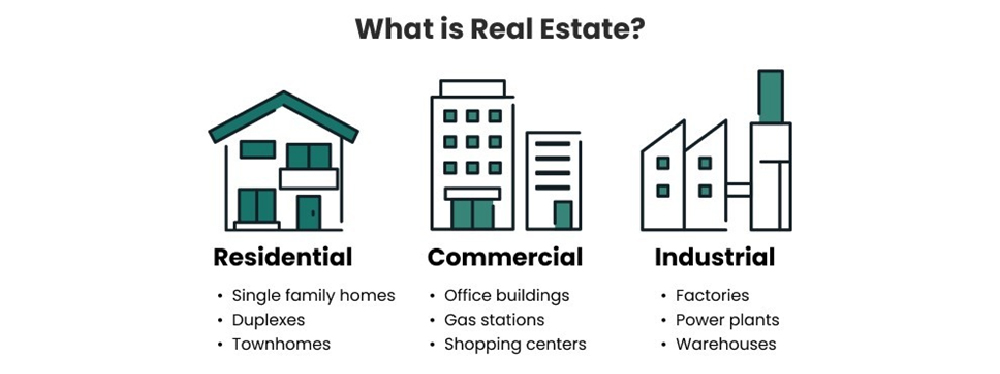
Calculating the GRM allows prospective investors and analysts to rapidly evaluate the value and feasibility of a prospective residential or commercial property. This easy computation allows financiers and analysts to quickly evaluate residential or commercial properties to determine which ones might be good investment chances and which ones might be poor.
The Gross Rent Multiplier is helpful to quickly examine the value of rental residential or commercial properties. By comparing the residential or commercial property's rate to its yearly gross rental income, GRM supplies a fast evaluation of potential returns on financial investment, making it an effective screening tool before dedicating to more detailed analyses.
The GRM is a reliable tool for comparing multiple residential or commercial properties by normalizing their values by their income-producing capability. This straightforward estimation permits financiers to quickly compare residential or commercial properties.
However, the GRM has some limitations to consider. For instance, it does not represent operating costs, which will impact the profitability of a residential or commercial property. Additionally, GRM does rule out vacancy rates, which can impact the actual rental income received.
What is the Formula for Calculating the Gross Rent Multiplier?
The Gross Rent Multiplier computation is relatively simple: it's the residential or commercial property value divided by gross rental earnings. More officially:
Gross Rent Multiplier = Residential Or Commercial Property Price ÷ Annual Gross Rental Income
Let's more go over the 2 metrics utilized in this estimation.
Residential or commercial property Price
There is no easily offered priced quote rate for residential or commercial properties given that realty is an illiquid investment. Therefore, property specialists will usually utilize the list prices or asking rate in the numerator.
Alternatively, if the residential or commercial property has just recently been assessed at fair market worth, then this number can be utilized. In some instances, the replacement cost or cost-to-build may be utilized rather. Regardless, the residential or commercial property cost used in the GRM computation assumes this value shows the current market price.
Annual Gross Rental Income
Annual gross rental earnings is the quantity of rental income the residential or commercial property is anticipated to produce. Depending upon the residential or commercial property and the terms, rent or lease payments might be made monthly. If this holds true, then the regular monthly lease quantities can be transformed to annual quantities by increasing by 12.
One bottom line for experts and investor to be aware of is computing the yearly gross rental earnings. By definition, gross amounts are before expenses or other reductions and may not represent the actual income that a real estate financier might collect.
For instance, gross rental earnings does not generally consider prospective uncollectible amounts from renters who become unable to pay. Additionally, there might be different incentives provided to tenants in order to get them to rent the residential or commercial property. These incentives efficiently reduce the rent a tenant pays.
Gross rental income may consist of other sources of earnings if suitable. For example, a property owner may independently charge for parking on the residential or commercial property. These extra earnings streams may be considered when examining the GRM but not all practitioners consist of these other earnings sources in the GRM estimation.
Bottom line: the GRM is roughly similar to the Enterprise Value-to-Sales multiple (EV/Sales). However, neither the Gross Rent Multiplier nor the EV/Sales several consider expenditures or expenses related to the residential or commercial property or the company (in the EV/Sales' use case).
Gross Rent Multiplier Examples
To compute the Gross Rent Multiplier, consider a residential or commercial property noted for $1,500,000 that creates $21,000 per month in lease. We first annualize the regular monthly lease by multiplying it by 12, which returns a yearly rent of $252,000 ($21,000 * 12).
The GRM of 6.0 x is calculated by taking the residential or commercial property price and dividing it by the annual lease ($1,500,000 ÷ $252,000). The 6.0 x several could then be compared to other, similar residential or commercial properties under consideration.
Interpretation of the GRM
Similar to assessment multiples like EV/Sales or P/E, a high GRM may suggest the residential or commercial property is overvalued. Likewise, a low GRM might show a good investment chance.
As with many metrics, GRM ought to not be utilized in isolation. More detailed due diligence must be carried out when selecting purchasing a residential or commercial property. For example, more analysis on maintenance expenses and vacancy rates should be carried out as these are not particularly included in the GRM computation.
Download CFI's Gross Rent Multiplier (GRM) Calculator
Complete the kind below and download our complimentary Gross Rent Multiplier (GRM) Calculator!
Why is the Gross Rent Multiplier Important for Real Estate Investors?
The GRM is best used as a fast screen to decide whether to allocate resources to additional examine a residential or commercial property or residential or commercial properties. It enables investor to compare residential or commercial property values to the rental earnings, permitting for much better comparability in between various residential or commercial properties.
Alternatives to the Gross Rent Multiplier
Gross Income Multiplier
Some investor choose to utilize the Gross earnings Multiplier (GIM). This computation is extremely comparable to GRM: the Residential or commercial property Value divided by the Effective Gross Income (rather of the Gross Rental Income).
The main distinction in between the Effective Gross Earnings and the Gross Rental Income is that the efficient earnings determines the lease after deducting anticipated credit or collection losses. Additionally, the income used in the GRM might sometimes exclude extra charges like parking charges, while the Effective Gross earnings consists of all sources of potential income.
Cap Rate
The capitalization rate (or cap rate) is determined by dividing the net operating income (NOI) by the residential or commercial property worth (sales price or market price). This metric is commonly used by investor looking to understand the possible return on financial investment of a residential or commercial property. A higher cap rate typically shows a higher return but may also show greater threat or an underestimated residential or commercial property.
The main distinctions in between the cap rate and the GRM are:
1) The cap rate is expressed as a percentage, while the GRM is a multiple. Therefore, a higher cap rate is generally considered better (disregarding other elements), while a higher GRM is usually indicative of an overvalued residential or commercial property (again ignoring other aspects).
2) The cap rate uses net operating earnings instead of gross rental earnings. Net operating earnings deducts all operating expenses from the total revenue created by the residential or commercial property, while gross income does not deduct any costs. Because of this, NOI supplies better insight into the prospective success of a residential or commercial property. The difference in metrics is approximately comparable to the difference in between conventional financial metrics like EBITDA versus Sales. Since NOI factors in residential or commercial property costs, it's better to use NOI when determining the payback period.
Advantages and Limitations of the Gross Rent Multiplier
Calculating and analyzing the Gross Rent Multiplier is crucial for anybody involved in industrial real estate. Proper interpretation of this metric helps make educated decisions and assess financial investment capacity.
Like any appraisal metric, it is very important to be knowledgeable about the benefits and downside of the Gross Rent Multiplier.
Simplicity: Calculating the GRM is reasonably easy and supplies an intuitive metric that can be easily interacted and interpreted.
Comparability: Since the GRM is a ratio, it scales the residential or commercial property value by its expected income, enabling users to compare various residential or commercial properties. By comparing the GRMs of different residential or commercial properties, investors can recognize which residential or commercial properties may use much better worth for money.
Limitations
Excludes Operating Expenses: A significant limitation of the GRM is that it does not consider the operating costs of a residential or commercial property. Maintenance costs, insurance coverage, and taxes can significantly impact the real profitability of a residential or commercial property.
Does Rule Out Vacancies: Another limitation is that GRM does not consider job rates. A residential or commercial property might reveal a favorable GRM, but modifications in vacancy rates can drastically minimize the actual earnings from renters.
The Gross Rent Multiplier is a valuable tool for any genuine estate financier. It works for fast contrasts and initial examinations of prospective realty investments. While it should not be utilized in seclusion, when integrated with more thorough analysis, the GRM can considerably boost decision-making and resource allotment in realty investing.
#8 Announcements, Package & Security Advisories » 10 Terms to Include in Your Rental Agreement » 2025-10-11 13:30:51
- HugoStoate
- Replies: 0
Trademarks vs. Copyrights
- How to Set Up a Trust
- How to Create a Will
- What Is a Durable Power of Attorney
- Arizona LLC
- California LLC
- Florida LLC
- Michigan LLC
- New Jersey LLC
- New York City LLC
- North Carolina LLC
- Ohio LLC
- Pennsylvania LLC
- Texas LLC
- Contact Us
- AI Doc Assist
- Business Name Generator
- Electronic Signature
- Free Trademark Search
- Legal Glossary
- Legal Templates
Legal Help
1. Legal Forms
10 Terms to Include in Your Rental Agreement
Find more legal types and design templates
Excellent
Belle Wong, J.D.
Contents
If you're a landlord and have residential or commercial property to rent, it is very important to have actually a written rental arrangement. If you and your tenant ever have a legal dispute, your possibilities of a beneficial outcome improve if you have a written agreement.
Your rental contract, nevertheless, should consist of some basic rental terms.
What Is a Rental Agreement?
A rental contract is a file that functions as a contract between you and your renter, specifying the regards to the occupancy. You can have it composed in a method that is beneficial to you due to the fact that you can decide what goes into the arrangement.
Most rental agreements are short-term arrangements, such as month-to-month tenancies, while lease arrangements are usually for longer rental periods, such as 6 months, a year, or more.
A rental contract is a good idea if you wish to ensure your tenant is dependable or if you're renting a space in a home in which you're living. It's easier to end a month-to-month tenancy than a long lease.
How to compose a rental contract

A month-to-month rental contract should include specific arrangements so that the contract secures you. It's often helpful to have a lawyer prepare a rental arrangement for you, even if it's just a one-page file, specifically if you're a newbie property owner.
Numerous arrangements can be consisted of, however a fundamental rental agreement must consist of at least the following 10 terms:
Identify the parties to the agreement and the address of the residential or commercial property you own. Ensure you consist of the name of every renter living at the residential or commercial property and their contact details. Include your name and contact information and the address of the residential or commercial property. Describe the residential or commercial property if it doesn't have a number. For example, if it's a space in a house, you can state that the residential or commercial property is the "third-floor bedroom" if there's just one bedroom on that floor. Be accurate.
The regard to the tenancy and how it ends. List the length of time the term is, such as a month-to-month rental or a three-month leasing. Start the rental term on the very first of the month. Include how much notice you and the tenant should give if either of you wants to end the arrangement. Consult a lawyer or your regional structure department about particular laws governing how much notice of termination you and the tenant need to provide for short-term or month-to-month contracts.
Rent and down payment. State just how much the lease is per month and where and how the tenant need to pay the rent. If you'll take credit cards over the phone, state that. If you desire the occupant to send out a rent check each month, offer the address. Include the amount of any late costs, however make sure they're not extreme. Also, list the amount of the security deposit. Check with your regional building department about limits on just how much you can gather for a down payment and late fees.
What's included with the rental. State whether you're offering any energies, such as electric, gas, heat, and cable. Alternatively, state the renter's obligation for energies. Be clear about what's included in the rent and what isn't. If you're offering devices and furnishings, list them by name, such as a dishwasher, stove, fridge, bed, and couch.
Pets. State whether family pets are allowed, what types, how numerous, and what, if any, additional charges apply. State clearly that the occupant can not bring any other type of animal if you desire to limit the type of animal. You can likewise select to have a no-pet policy. State that in the rental arrangement.
Each occupant's name and the variety of occupants. If you don't want additional occupants, state that the occupant is the only person enabled to inhabit the facilities. List all residents and state, for instance, that no more than two individuals might inhabit the rental. State that this contract is in between you and your tenant only and that the renter might not sublease or designate the rental.
Landlord's access to the residential or commercial property for repairs, upkeep, and inspection. State what notice you'll provide to go into the premises for repairs other than emergency repairs. Many regional communities have their own notification requirements, while some states have constant requirements throughout the state, so discuss this with your attorney or regional structure department. State that the tenant's failure to give you access for required repairs is a ground for termination. Also, state what the occupant is accountable for fixing.
Rules of the occupancy. List what you anticipate of the tenant, such as no illegal activities, no smoking on the premises, and no noise after a particular hour. State that you can end the arrangement if the occupant stops working to abide by the tenancy guidelines and that the occupant is accountable for legal costs if you need to take the tenant to court to implement the agreement.
Damaged residential or commercial property. State that the occupant is responsible for damages aside from routine wear and tear. Include that the tenant must return the facilities in "broom-clean" condition. State that the occupant is responsible for legal fees if you take the occupant to court for damaged residential or commercial property.
Signatures. You and the occupant need to sign and date the agreement at the bottom.
So long as you have these terms in your rental arrangement, you're securing yourself in the event your tenant is someone you no longer want to rent to. The rental arrangement supplies an easy way for you to get them to move out and reveals what they're accountable for if they do not leave voluntarily.
This post is for educational functions. This content is not legal suggestions, it is the expression of the author and has actually not been evaluated by LegalZoom for precision or changes in the law.
You may likewise like
Company
About.
Careers.
Contact.
Investors.
Press.
Partner with us.
Support
Order status.
Customer Care.
Speak to a lawyer.
Join our attorney network.
Security.
Learn more
Business & Legal assist resources.
Business Name Generator.
Legal type templates.
What is an LLC?
How to Start an LLC?
How to Change Your Name.
What is a DBA?
Most Profitable Small Company Ideas.
What Is a Registered Agent?
How to Conduct a Trademark Search.
How to Discover if a Service Name is Taken?
© LegalZoom.com, Inc. All rights reserved.
LegalZoom offers access to independent attorneys and self-service tools. LegalZoom is not a law practice and does not provide legal guidance, except where licensed through its subsidiary law practice LZ Legal Services, LLC. Use of our products and services is governed by our Regards to Use and Privacy Policy.
#9 Newbie Corner » Managing Residential Rent Increases under Brand-new Laws » 2025-10-10 15:55:38
- HugoStoate
- Replies: 0
From 5/7/2025 through 12/31/2025, the rent boost cap is 10%.
From 1/1/26 through 12/31/26, the rent increase cap is 9.683%
It is a finest practice for housing providers to adjust rent frequently, keeping rents in the variety of the location market rate. Housing providers that keep rents lower than the market rate in order to keep long-term occupants will quickly find themselves in a situation where they require to contribute cash to the residential or commercial property for ongoing upkeep, and to cover increasing operating expense such as taxes, insurance coverage, and administration, like having to serve notices by means of Certified Mail!
It is crucial to create and document your rent boost policies to follow all state and regional federal government guidelines on increasing lease. First, let's look at the new and existing laws that govern rent increases throughout the state, then review the steps and best practices for providing rent boosts.
RENT INCREASE REQUIREMENTS FOR ALL RESIDENTIAL TENANCIES:
RCW 59.18.140 + EHB 1217 (WA 2025); and 59.12.040 + EHB 1003 (WA 2025)
- Definition: "Rent" or "rental amount" suggests repeating and routine charges identified in the rental arrangement for the use and occupancy of the premises, which may include charges for utilities. This does not consist of non-recurring charges for expenses due to late payment, damages, deposits, legal expenses, or other charges, consisting of lawyers' fees. (RCW 59.18.030)
- Minimum notification for rent boost is 90 days.
• If the rental arrangement governs a subsidized tenancy where the quantity of rent is based on the income of the tenant or scenarios specific to the subsidized home, a property owner shall offer a minimum of thirty days' previous written notification of an increase in the amount of lease to each affected tenant.
- Any boost in the amount of lease might not end up being effective before the conclusion of the term of the rental agreement.
- You must use a particular lease boost notice form included in the statute, EHB 1217 (WA 2025).
• The RHAWA Rent Increase Notice abide by the statute.
- No rent boost can be offered in the very first 12 months of occupancy.
• Per the new statutory type, however not really defined in law, only one lease increase can be given up any 12-month duration after the first 12-month duration.
- Rent increase notification must be served like an eviction notice per RCW 59.12.040.
• (See "Serving Notices Under New Law" on page 27.)
- New service requirements efficient 7/27/2025 under HB 1003 require mailing by Certified Mail, although no longer within the same County.
- Rent boost is limited to 7% + Consumer Price Index (CPI) or 10%, whichever is less, per 12-month period.
• For each fiscal year, the CPI number to be referenced will be selected and revealed by the Department of Commerce (DOC) at www.commerce.wa.gov/housing-policy/hb1217-landlord-resource-center/
- - From 5/7/2025 through 12/31/2025, the lease increase cap is 10%.
- From 1/1/26 through 12/31/26, the rent boost cap is 9.683%
The law prohibits using any rewards based upon length of term or month-to-month status aside from a 5% distinction in monthly rent amount.
• If using an incentive in an existing tenancy, the greater deal should adhere with the lease boost limitation, 7% + CPI.
Note: The renter needs to provide a "notice to treat" to the landlord who increases rent unlawfully. Even without, AG can still bring enforcement action, consisting of refunding rent, charges as much as 3 months' lease, a $7500 fine per violation, attorney costs, and court expenses.
Lease Renewal Laws
If you have a term lease, you can not unilaterally raise the rent mid-term. To need a tenant to sign a lease renewal rather than going into a month-to-month tenancy, RCW 59.18.650( 1) specifies that you serve an "end of term" notice at least 60 days prior to the end of the term. Per the End of Term Notice, the renter must sign before completion of the term, or they must abandon.
Under EHB 1217 in result on 5/7/2025, if the lease renewal offer consists of a lease boost, notification of that boost should be served 90 days before completion of the term.
If an extended lease increase notice is needed under a regional federal government law, the rent increase notification should be offered initially, and then the lease renewal with a copy of the lease boost notice kind attached. Use the RHAWA form, End of Term Notice with Lease Extension, following the provided guidelines.
City Government Regulations
Although we now have statewide lease control, RCW 35.21.830 still prohibits cities or counties in Washington from implementing their own rent increase caps. However, numerous local governments have enacted laws that require prolonged notice durations for rent boosts and other measures planned to make complex the procedure for increasing lease.
The most common rent boost guideline that will still be in result on top of the brand-new state law is:
"Any overall lease increase higher than 3% requires 120 days' notice." This guideline uses in the cities of Issaquah, Kenmore, Kirkland, Port Townsend, Redmond, SeaTac, and Woodinville, plus all unincorporated locations of King County.
The next most typical additional guideline is: "Any overall rent boost higher than 5% requires 120 days' notice," embraced by the cities of Auburn, Olympia, and Tumwater.
And a couple of more cities have their own distinct set of guidelines:
City of Bellingham: Any overall lease increase requires 120 days' notification. If the total rent increase is 8% or more over a 12-month rolling duration, the notice shall include a variety of additional details, including a reasoning for the lease increase and information about Bellingham's Economic Displacement Relocation Assistance (EDRA) program.
City of Seattle: Any rent increase needs 180 days' notification. If the postal service utilized for mailing notification needs a signature, notice must also be sent by regular top-notch mail. If the boost is for 10%, the notice must also consist of Seattle's EDRA Notice.
City of Shoreline:
- - "Base Rent" suggests a recurring and periodic charge determined in the rental contract for use and tenancy of a residence or dwelling system. Base Rent may include charges for utilities, however does not consist of those charges defined as Optional Rent.
- "Optional Rent" means recurring and periodic charges determined in the rental agreement that are not needed for use and occupancy however that a tenant willingly concurs to, such as charges for a parking area or a family pet.
- "Rent" indicates the total combined amount of Base Rent and Optional Rent.
- Any "Base Rent" boost greater than 3% but less than 10% needs 120 days written notice.
- Any "Base Rent" increase of 10% needs 180 days' notice.
- Any "Optional Rent" increase of any amount needs a minimum of 60 days' prior composed notification to each affected occupant. (New state law increases this to 90 days.)
NOTE: Several city governments have laws that are the same as the new state law (e.g., RCW 59.12.040 service required) or are superseded by more tenant-friendly state law (e.g., allowances for rent increases higher than 10%). These obsolete guidelines have actually been omitted from the above to avoid confusion. The City of Burien rescinded BMC 5.63.100 - Rent increases on May 19, 2025.
Basic Steps and Best Practices for Increasing Rent
Remember, do refrain from doing any rent increases during the first year of tenancy, and in the meantime, just do one boost per 12-month period (this might change - fingers crossed!).
Lease Renewals or Rules Changes without Rent Increases
If no lease boost is needed on a lease renewal and you are imposing repaired lease terms, send a lease renewal deal with more than 90 days' notice. If the occupant does not sign, serve an End of Term Notice with Lease Renewal (RHAWA kind). If they do not sign in thirty days, you can enhance this by serving an End of Tenancy Notice (RHAWA form) with chosen cause k. Resident stops working to sign a brand-new rental arrangement, etc by the end of the term (ensure to email some pointers), you can have your attorney proceed with an illegal detainer. You can alter nonrent associated guidelines at lease
renewal, or in a month-to-month occupancy utilizing a 30-day Rules Change in Regards To Tenancy Notice.
Document Your Rent Increase Practices
RCW 59.18.240 prohibits the property manager from retaliation or making reprisals against the tenant in action to the occupant doing anything that was within their rights to do. Retaliatory actions include lease increases. RCW 59.18.250 states that if a proprietor takes an unfavorable action (such as a lease increase) within 90 days of a renter exercising their rights, such as making a fair housing problem, there is a rebuttable anticipation that the proprietor is guilty of retaliation, and the problem of proof is on the property owner. Similarly, a property owner could be implicated of "economic eviction" if they raise lease excessively with the intention of forcing individuals to vacate.
Therefore, it is really essential to only provide lease increases utilizing reasonable and constant practices based upon nondiscriminatory, nonretaliatory business requirements and rental market trends. It is likewise crucial to document your rent increase practices in case you need to react to a retaliation grievance.
Formal legal guidance and evaluation are advised prior to the selection and usage of this details. RHAWA does not represent your choice or execution of this details as appropriate for your specific circumstance. The material contained and represented herein, although acquired from reputable sources, is ruled out legal guidance or to be utilized as an alternative for legal counsel.
Pages: 1