Phantom Linux OS Forums
Unfortunately no one can be told what Phantom Linux OS is - you have to see it for yourself.
You are not logged in.
- Topics: Active | Unanswered
#1 2025-10-11 21:26:22
- HugoStoate
- Member
- Registered: 2025-10-10
- Posts: 9
- Website
Calculate Gross Rent Multiplier and how it is Utilized By Investors
What is the Gross Rent Multiplier (GRM)?
The Gross Rent Multiplier (GRM) is a quick estimation utilized by genuine estate analysts and financiers to examine the worth of a rental residential or commercial property. It represents the ratio of the residential or commercial property's price (or worth) to its yearly gross rental earnings.
The GRM is beneficial due to the fact that it provides a fast evaluation of the prospective returns on financial investment and is useful as a method to screen for potential financial investments. However, the Gross Rent Multiplier must not be used in seclusion and more in-depth analysis need to be performed before picking buying a residential or commercial property.
Definition and Significance
The Gross Rent Multiplier is used in commercial property as a "back-of-the-envelope" screening tool and for assessing equivalent residential or commercial properties comparable to the price per square foot metric. However, the GRM is not usually used to domestic real estate with the exception of large home complexes (typically 5 or more units).
Like with lots of assessment multiples, the Gross Rent Multiplier might be seen as a rough estimate for the payback duration of a residential or commercial property. For instance, if the GRM yields a worth of 8x, it can take around 8 years for the investment to be repaid. However, there is more subtlety around this interpretation talked about later in this article.
Use Cases in Real Estate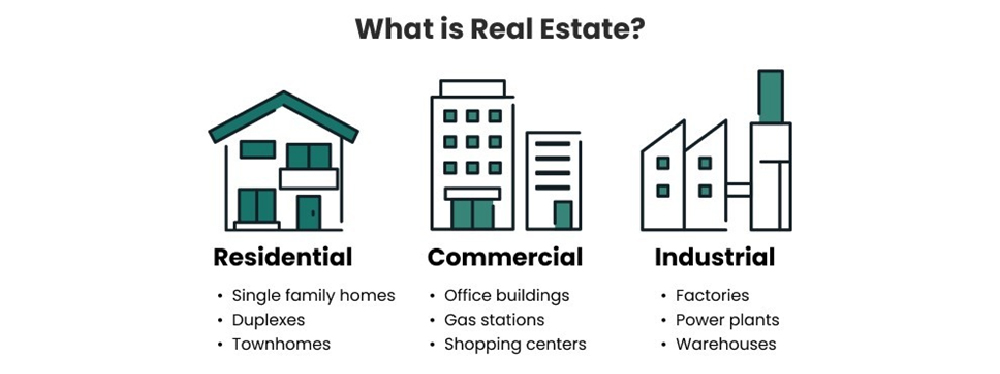
Calculating the GRM allows prospective investors and analysts to rapidly evaluate the value and feasibility of a prospective residential or commercial property. This easy computation allows financiers and analysts to quickly evaluate residential or commercial properties to determine which ones might be good investment chances and which ones might be poor.
The Gross Rent Multiplier is helpful to quickly examine the value of rental residential or commercial properties. By comparing the residential or commercial property's rate to its yearly gross rental income, GRM supplies a fast evaluation of potential returns on financial investment, making it an effective screening tool before dedicating to more detailed analyses.
The GRM is a reliable tool for comparing multiple residential or commercial properties by normalizing their values by their income-producing capability. This straightforward estimation permits financiers to quickly compare residential or commercial properties.
However, the GRM has some limitations to consider. For instance, it does not represent operating costs, which will impact the profitability of a residential or commercial property. Additionally, GRM does rule out vacancy rates, which can impact the actual rental income received.
What is the Formula for Calculating the Gross Rent Multiplier?
The Gross Rent Multiplier computation is relatively simple: it's the residential or commercial property value divided by gross rental earnings. More officially:
Gross Rent Multiplier = Residential Or Commercial Property Price ÷ Annual Gross Rental Income
Let's more go over the 2 metrics utilized in this estimation.
Residential or commercial property Price
There is no easily offered priced quote rate for residential or commercial properties given that realty is an illiquid investment. Therefore, property specialists will usually utilize the list prices or asking rate in the numerator.
Alternatively, if the residential or commercial property has just recently been assessed at fair market worth, then this number can be utilized. In some instances, the replacement cost or cost-to-build may be utilized rather. Regardless, the residential or commercial property cost used in the GRM computation assumes this value shows the current market price.
Annual Gross Rental Income
Annual gross rental earnings is the quantity of rental income the residential or commercial property is anticipated to produce. Depending upon the residential or commercial property and the terms, rent or lease payments might be made monthly. If this holds true, then the regular monthly lease quantities can be transformed to annual quantities by increasing by 12.
One bottom line for experts and investor to be aware of is computing the yearly gross rental earnings. By definition, gross amounts are before expenses or other reductions and may not represent the actual income that a real estate financier might collect.
For instance, gross rental earnings does not generally consider prospective uncollectible amounts from renters who become unable to pay. Additionally, there might be different incentives provided to tenants in order to get them to rent the residential or commercial property. These incentives efficiently reduce the rent a tenant pays.
Gross rental income may consist of other sources of earnings if suitable. For example, a property owner may independently charge for parking on the residential or commercial property. These extra earnings streams may be considered when examining the GRM but not all practitioners consist of these other earnings sources in the GRM estimation.
Bottom line: the GRM is roughly similar to the Enterprise Value-to-Sales multiple (EV/Sales). However, neither the Gross Rent Multiplier nor the EV/Sales several consider expenditures or expenses related to the residential or commercial property or the company (in the EV/Sales' use case).
Gross Rent Multiplier Examples
To compute the Gross Rent Multiplier, consider a residential or commercial property noted for $1,500,000 that creates $21,000 per month in lease. We first annualize the regular monthly lease by multiplying it by 12, which returns a yearly rent of $252,000 ($21,000 * 12).
The GRM of 6.0 x is calculated by taking the residential or commercial property price and dividing it by the annual lease ($1,500,000 ÷ $252,000). The 6.0 x several could then be compared to other, similar residential or commercial properties under consideration.
Interpretation of the GRM
Similar to assessment multiples like EV/Sales or P/E, a high GRM may suggest the residential or commercial property is overvalued. Likewise, a low GRM might show a good investment chance.
As with many metrics, GRM ought to not be utilized in isolation. More detailed due diligence must be carried out when selecting purchasing a residential or commercial property. For example, more analysis on maintenance expenses and vacancy rates should be carried out as these are not particularly included in the GRM computation.
Download CFI's Gross Rent Multiplier (GRM) Calculator
Complete the kind below and download our complimentary Gross Rent Multiplier (GRM) Calculator!
Why is the Gross Rent Multiplier Important for Real Estate Investors?
The GRM is best used as a fast screen to decide whether to allocate resources to additional examine a residential or commercial property or residential or commercial properties. It enables investor to compare residential or commercial property values to the rental earnings, permitting for much better comparability in between various residential or commercial properties.
Alternatives to the Gross Rent Multiplier
Gross Income Multiplier
Some investor choose to utilize the Gross earnings Multiplier (GIM). This computation is extremely comparable to GRM: the Residential or commercial property Value divided by the Effective Gross Income (rather of the Gross Rental Income).
The main distinction in between the Effective Gross Earnings and the Gross Rental Income is that the efficient earnings determines the lease after deducting anticipated credit or collection losses. Additionally, the income used in the GRM might sometimes exclude extra charges like parking charges, while the Effective Gross earnings consists of all sources of potential income.
Cap Rate
The capitalization rate (or cap rate) is determined by dividing the net operating income (NOI) by the residential or commercial property worth (sales price or market price). This metric is commonly used by investor looking to understand the possible return on financial investment of a residential or commercial property. A higher cap rate typically shows a higher return but may also show greater threat or an underestimated residential or commercial property.
The main distinctions in between the cap rate and the GRM are:
1) The cap rate is expressed as a percentage, while the GRM is a multiple. Therefore, a higher cap rate is generally considered better (disregarding other elements), while a higher GRM is usually indicative of an overvalued residential or commercial property (again ignoring other aspects).
2) The cap rate uses net operating earnings instead of gross rental earnings. Net operating earnings deducts all operating expenses from the total revenue created by the residential or commercial property, while gross income does not deduct any costs. Because of this, NOI supplies better insight into the prospective success of a residential or commercial property. The difference in metrics is approximately comparable to the difference in between conventional financial metrics like EBITDA versus Sales. Since NOI factors in residential or commercial property costs, it's better to use NOI when determining the payback period.
Advantages and Limitations of the Gross Rent Multiplier
Calculating and analyzing the Gross Rent Multiplier is crucial for anybody involved in industrial real estate. Proper interpretation of this metric helps make educated decisions and assess financial investment capacity.
Like any appraisal metric, it is very important to be knowledgeable about the benefits and downside of the Gross Rent Multiplier.
Simplicity: Calculating the GRM is reasonably easy and supplies an intuitive metric that can be easily interacted and interpreted.
Comparability: Since the GRM is a ratio, it scales the residential or commercial property value by its expected income, enabling users to compare various residential or commercial properties. By comparing the GRMs of different residential or commercial properties, investors can recognize which residential or commercial properties may use much better worth for money.
Limitations
Excludes Operating Expenses: A significant limitation of the GRM is that it does not consider the operating costs of a residential or commercial property. Maintenance costs, insurance coverage, and taxes can significantly impact the real profitability of a residential or commercial property.
Does Rule Out Vacancies: Another limitation is that GRM does not consider job rates. A residential or commercial property might reveal a favorable GRM, but modifications in vacancy rates can drastically minimize the actual earnings from renters.
The Gross Rent Multiplier is a valuable tool for any genuine estate financier. It works for fast contrasts and initial examinations of prospective realty investments. While it should not be utilized in seclusion, when integrated with more thorough analysis, the GRM can considerably boost decision-making and resource allotment in realty investing.
Feel free to visit my page; homes
Offline